AI Agents
AI agents that survive production: five lessons from the field
Zekto Team7 min read
Agents demo beautifully and fail quietly. These are the engineering habits that keep them reliable once real users and real data arrive.
An AI agent that books meetings in a demo is easy. An agent that does it correctly ten thousand times, across messy calendars and edge cases, is engineering. Here is what we have learned building agents that run every day.
1. Give agents small, sharp tools
Agents are only as reliable as the tools they call. Instead of one giant "do everything" API, expose small tools with clear names, strict input schemas and helpful error messages. When a tool fails, the agent should understand why and recover.
2. Design the approval points first
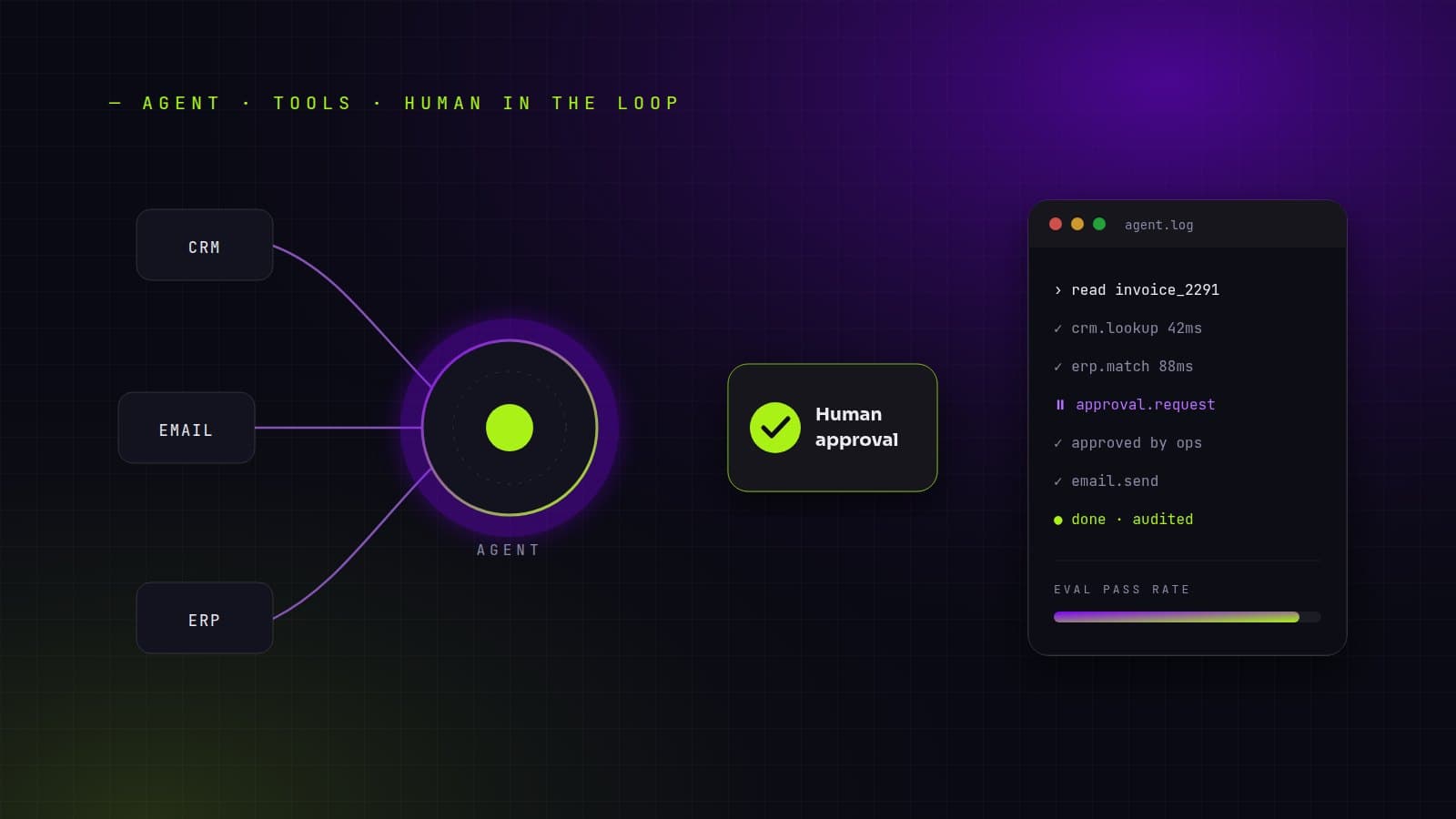
Decide up front which actions are reversible and which are not. Reading a record is safe; sending money is not. Put human approval on the irreversible steps and let the agent run freely on the rest.
3. Evaluate before you launch
Build an evaluation set from real cases — including the awkward ones. Run it on every change. If you cannot measure whether a prompt change helped, you are guessing.
eval/
  cases.jsonl      # real inputs, anonymised
  expected.jsonl   # what a good outcome looks like
  run.ts           # scores each case, prints a summary
4. Log everything an agent does
Every tool call, every decision, every escalation should be traceable. Logs turn "the AI did something weird" into a five-minute fix instead of a week of investigation.
5. Plan for drift
Data changes, policies change, users find new ways to phrase things. Schedule regular reviews of agent performance and keep the evaluation set growing.
Reliability is not a feature you add at the end. It is the shape of the whole system.
Agents are a genuine step change in what software can do. Treat them like any other critical system — with tests, observability and clear ownership — and they will repay the effort many times over.