AI Strategy
Where AI pays off first: a practical guide for leadership teams
Zekto Team6 min read
Most AI projects fail before a line of code is written, because they start with the technology instead of the work. Here is how to find the use cases that actually return value.
Every leadership team we meet has the same question: where should we start with AI? The honest answer is rarely "with the most impressive demo". It is usually with the most boring, repetitive, expensive work your people do every week.
Start with the work, not the model
Before talking about models or vendors, map how work actually flows through your organisation. Look for three signals:
- Volume — tasks that happen hundreds or thousands of times a month.
- Friction — steps where people copy, check, re-type or wait.
- Judgement that follows rules — decisions that are mostly consistent, with a few exceptions.
Where all three overlap, AI usually pays off quickly.
Score opportunities honestly
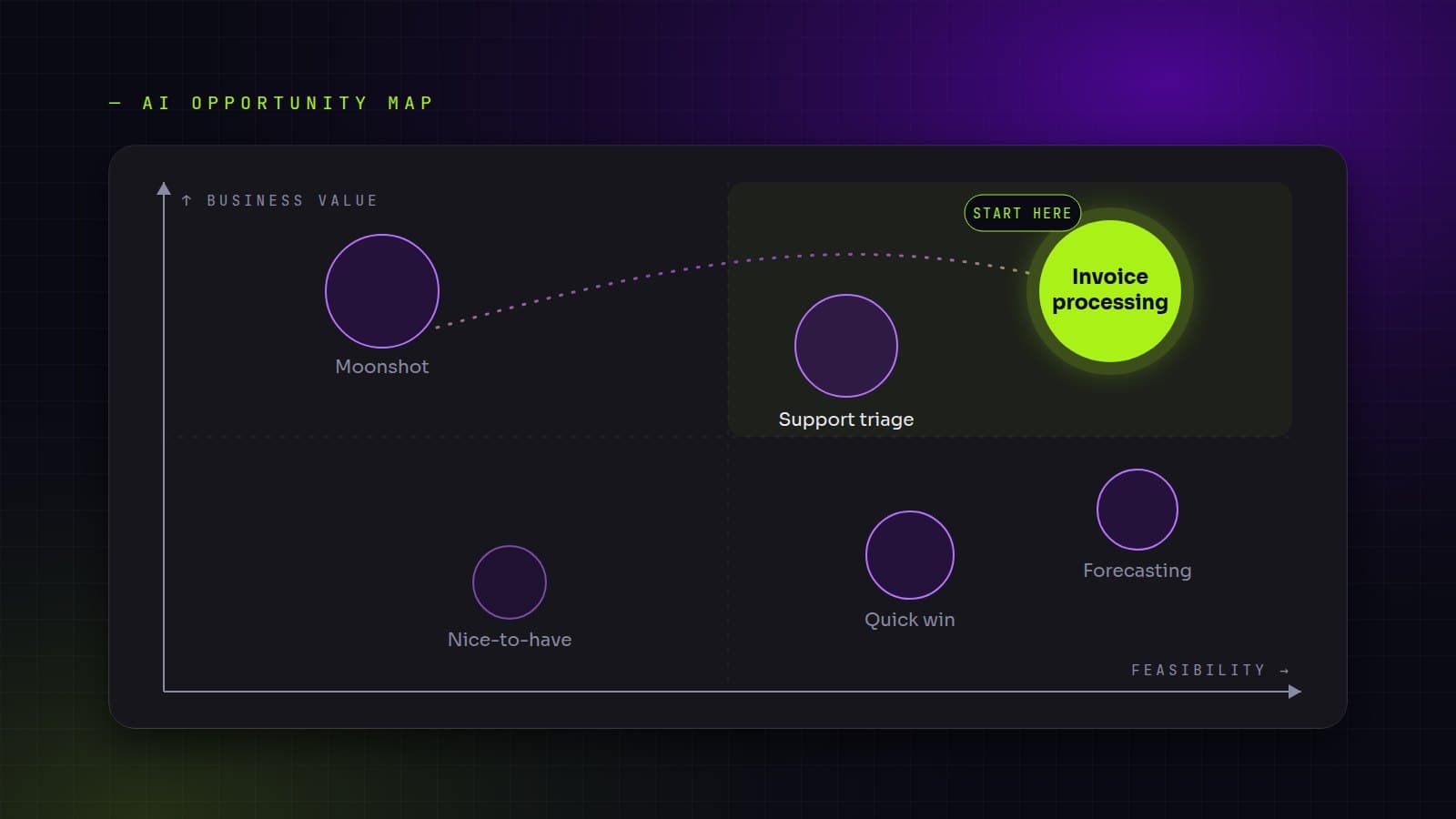
We score each candidate on four axes: business value, data readiness, technical feasibility and risk. A use case with modest value but clean data and low risk will often beat a moonshot that depends on data you do not have yet.
The best first AI project is one your team can ship in weeks, measure in a month, and build on for years.
Keep a human in the loop
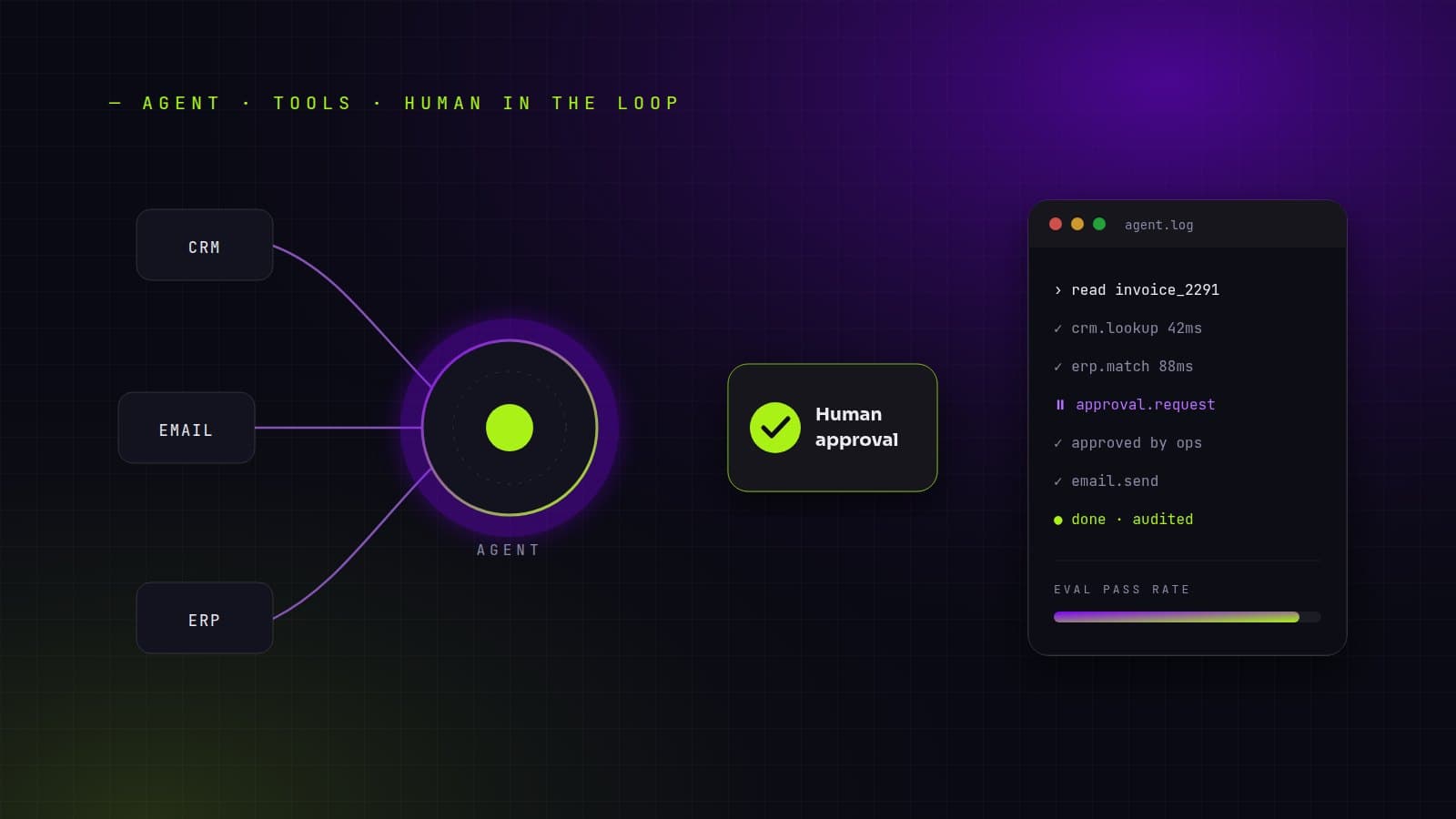
Early wins come from AI that assists people rather than replacing decisions outright. Drafting a reply that an agent approves, or flagging the ten contracts out of a thousand that need a lawyer's eye, gives you speed without giving up control.
Measure from day one
Agree the baseline before you build: how long does the task take today, how many errors, how much does it cost? Without a baseline, even a great system becomes an argument instead of a result.
A simple 90-day plan
- Weeks 1–2: map processes and shortlist five use cases.
- Weeks 3–4: score them, pick one, and define success.
- Weeks 5–10: build, test with real users, iterate.
- Weeks 11–12: launch to a pilot group and measure against the baseline.
Small, measured, and real beats big, vague and theoretical — every time.