Generative AI
Grounded assistants: how to make generative AI answer from your own data
Zekto Team5 min read
A knowledge assistant is only useful if people trust its answers. Grounding, citations and honest uncertainty are what earn that trust.
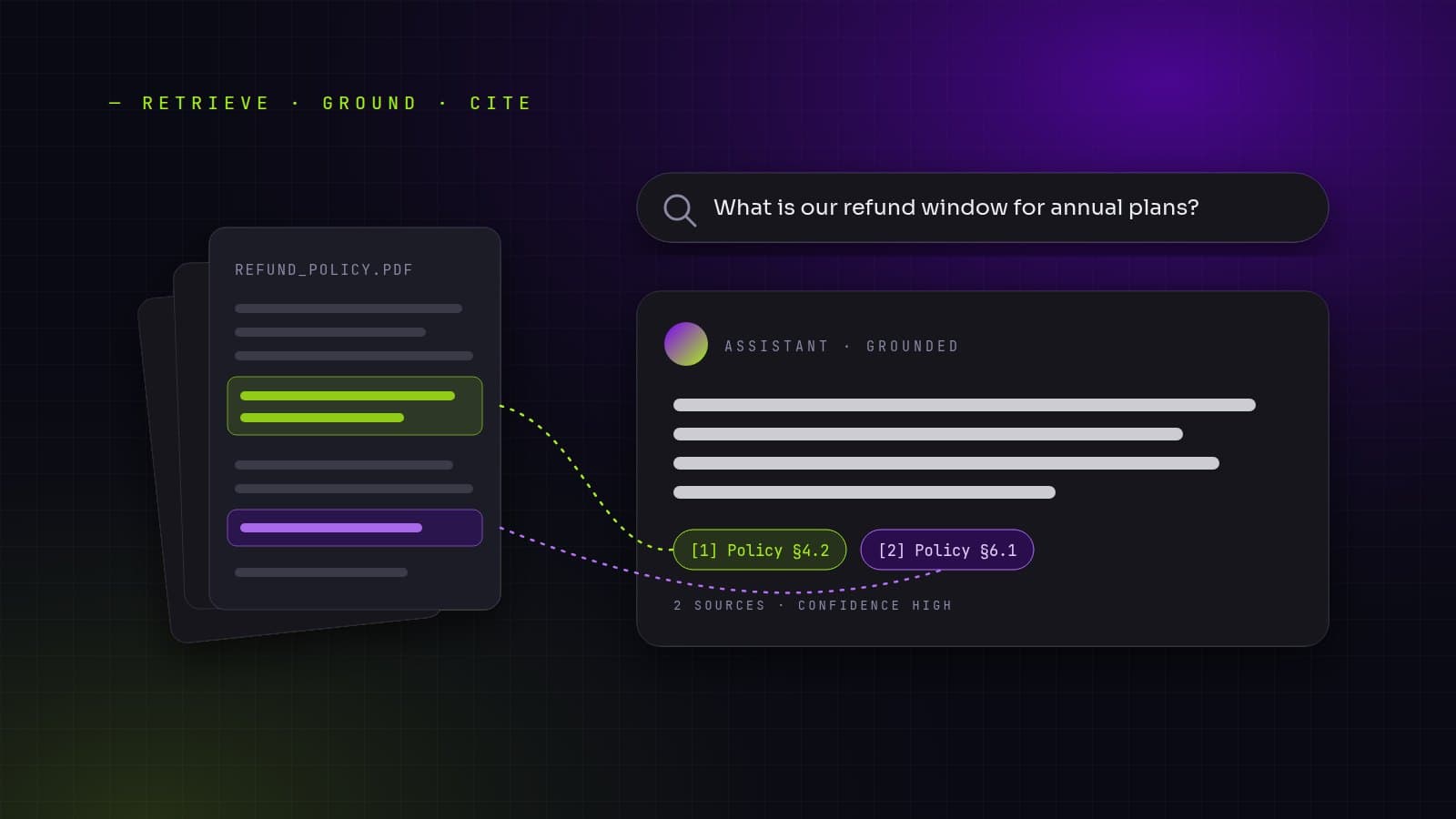
Generic chatbots know a lot about the world and nothing about your business. A grounded assistant answers from your documents, policies and data — and shows you where each answer came from.
How grounding works
When a question arrives, the system first retrieves the most relevant passages from your knowledge base, then asks the model to answer using only those passages. This pattern is often called retrieval-augmented generation (RAG).
Citations build trust
Every answer should link back to its sources. When people can click through to the policy or report behind an answer, they stop second-guessing the assistant and start relying on it.
Teach it to say "I don't know"
The most important behaviour of a grounded assistant is refusing to make things up. If the retrieved passages do not contain the answer, the assistant should say so and suggest who to ask.
Keep the knowledge fresh
Connect the assistant to the systems where documents actually live, and re-index automatically when they change. A stale knowledge base produces confident, outdated answers — the worst kind.
What good looks like
- Answers in seconds, with sources attached.
- Clear "I don't know" when the data is missing.
- Measured accuracy on a test set before launch.
- Usage analytics that show what people really ask.
Done well, a grounded assistant becomes the fastest way for anyone in your organisation to find what they need.